Every business operating in South Africa must engage with a complex and constantly evolving tax landscape. The South African Revenue Service (SARS) enforces strict compliance measures, but it also offers specific incentives designed to help businesses grow. Knowing how to navigate these rules is a critical component of running a successful enterprise.
Corporate tax directly affects your cash flow, pricing models, and long-term financial planning. Missing a deadline or misunderstanding an allowance can lead to hefty penalties and interest charges. Conversely, a thorough understanding of the system allows company directors to optimise their tax positions and reinvest saved capital back into the business.
This guide breaks down the essential elements of corporate income tax in South Africa. You will learn about the different tax rates, compliance obligations, and recent legislative updates that could impact your bottom line.
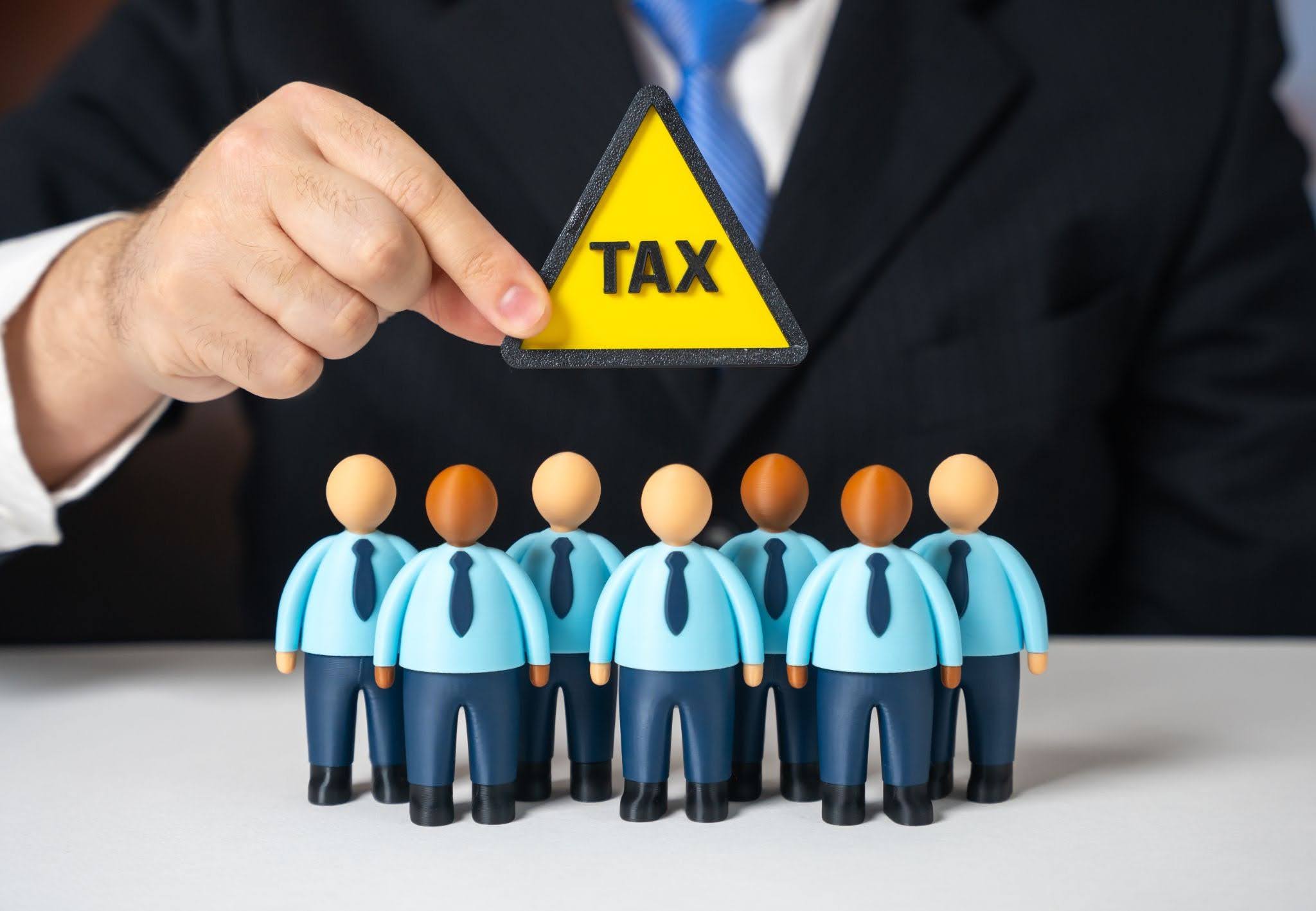
Who pays Corporate Income Tax (CIT) in South Africa?
The requirement to pay corporate tax depends largely on the residency status of your business and the source of its income.
A company is considered a South African tax resident if it is incorporated within the country or if its place of effective management is located there. Resident companies are taxed on their worldwide income. Non-resident companies, on the other hand, are only taxed on income sourced from within South Africa, such as revenue generated through a local branch or agency.
Various entities are liable for corporate income tax under the Income Tax Act. This includes private companies (Pty Ltd), close corporations (CC), unlisted and listed public companies, co-operatives, and collective investment schemes. Even dormant companies must submit a tax return to declare their inactive status.
Corporate Income Tax rates
For many years, the standard corporate tax rate in South Africa was 28%. However, for years of assessment ending on or after 31 March 2023, the standard corporate income tax rate was reduced to a flat 27%.
While the 27% rate applies to the vast majority of companies, the government applies special considerations to certain industries. For instance, companies mining for gold are subject to special rates based on a standard formula. Long-term life insurance companies follow a “five-funds approach”, where policies are divided into different funds, each taxed at specific rates depending on the nature of the beneficiary.
Small Business Corporations (SBCs) tax rates
The South African government provides significant tax relief to smaller enterprises that meet the strict definition of a Small Business Corporation (SBC). To qualify, a private company must be owned entirely by natural persons, and its gross income cannot exceed R20 million for the year of assessment, among other criteria.
Instead of a flat 27% rate, qualifying SBCs benefit from a progressive, tiered tax structure. This allows them to pay zero tax on their first portion of income, with rates gradually increasing as profits grow.
For the 2025/2026 tax year (ending between 1 April 2025 and 31 March 2026), the SBC rates are:
- 0% on the first R95,750 of taxable income.
- 7% on taxable income between R95,751 and R365,000.
- R18,848 plus 21% on taxable income between R365,001 and R550,000.
- R57,698 plus 27% on amounts exceeding R550,000.
The recent 2026 Budget adjusted these brackets to provide further inflation relief. For years of assessment ending between 1 April 2026 and 31 March 2027, the tax-free threshold increases:
- 0% on the first R99,000 of taxable income.
- 7% on taxable income between R99,001 and R365,000.
- R18,620 plus 21% on taxable income between R365,001 and R550,000.
- R57,470 plus 27% on amounts exceeding R550,000.
Other key taxes affecting businesses
Beyond standard corporate income tax, companies must account for several other levies and taxes.
Dividends Tax
When a resident company pays out profits to its shareholders, it must withhold Dividends Tax at a flat rate of 20%. The company acts as a withholding agent, paying this amount directly to SARS on behalf of the shareholder. Exemptions apply if the dividend is paid to another South African resident company or a retirement fund.
Capital Gains Tax (CGT)
When a company sells an asset for a profit, that gain is subject to Capital Gains Tax. For companies, the inclusion rate is 80%. This means 80% of the profit is added to the company’s standard taxable income and taxed at the 27% corporate rate, resulting in an effective CGT rate of 21.6%.
Turnover Tax for micro-businesses
To reduce the administrative burden on very small companies, SARS offers a presumptive Turnover Tax. Instead of calculating complex profit margins and deductions, eligible micro-businesses pay a small percentage based purely on their turnover. Following the 2026 Budget speech, the qualifying turnover threshold for this system will increase from R1 million to R2.3 million, effective 1 March 2026.
Global minimum tax (Pillar Two)
South Africa recently enacted the Global Minimum Tax Act to align with the OECD’s Pillar Two framework. Effective for fiscal years beginning on or after 1 January 2024, large multinational enterprise groups with annual consolidated revenues of at least EUR 750 million must pay a top-up tax to ensure their effective tax rate in South Africa is at least 15%.
Local government taxes
South Africa does not levy any local municipal or provincial taxes on corporate income. All income taxes are administered centrally by SARS.
Tax compliance and administration
Maintaining compliance with SARS requires strict adherence to registration and filing deadlines.
Every company must register as a taxpayer with SARS to obtain an income tax reference number. If you register a new company via the Companies and Intellectual Property Commission (CIPC), it is usually registered for income tax automatically.
Companies must submit an annual tax return (ITR14) within 12 months of their financial year-end. This is almost exclusively done through the SARS eFiling portal. Depending on the company’s size and public interest score, signed financial statements may also need to be submitted alongside the return.
South Africa uses a provisional tax system to help businesses manage their tax liabilities throughout the year. Companies must estimate their taxable income and make advance payments to SARS.
- The first payment is due six months into the financial year.
- The second payment is due on the last day of the financial year.
- An optional third “top-up” payment can be made six months after the financial year-end (or seven months for companies with a February year-end) to avoid interest charges if the initial estimates were too low.
Late submissions and underpayments are met with administrative penalties and interest. As of late 2023, the prescribed interest rate charged by SARS on outstanding taxes fluctuates around 10.75% annually.
Tax incentives and relief measures
The government uses tax incentives to stimulate specific sectors and encourage business growth.
General incentives include the Section 11D research and development allowance, which allows qualifying companies to deduct 150% of their approved R&D expenditure. There are also specific accelerated depreciation allowances for manufacturing assets (Section 12C) and machinery used in the production of renewable energy.
Companies operating within designated Special Economic Zones (SEZs) or Urban Development Zones (UDZs) can also access unique building allowances and reduced corporate tax rates. Additionally, South Africa holds double taxation agreements with over 80 countries, ensuring that companies operating across borders do not pay tax twice on the same income.
Recent budget measures have focused heavily on small business tax relief. The compulsory VAT registration threshold and the micro-business turnover tax threshold will both increase to R2.3 million in 2026, freeing many smaller enterprises from heavy administrative burdens.
Recent developments and future outlook
SARS continues to modernise its systems to improve efficiency and monitor compliance. Recent enhancements to the eFiling system include the digital submission of Reportable Arrangements, which previously had to be emailed manually.
The ITR14 form is also regularly updated with new validation questions, particularly concerning credit agreements, learnership allowances, and foreign tax credits. Staying updated on these legislative and administrative changes is vital for accurate reporting.
Take control of your business tax strategy
Navigating corporate tax in South Africa involves much more than simply paying a flat 27% on your profits. From understanding progressive SBC rates and capital gains inclusion rules to managing provisional tax deadlines and new global minimum tax standards, the regulatory environment is comprehensive.
Because tax legislation shifts annually with every national budget, relying on outdated information can put your business at risk. Partnering with a registered tax practitioner or accounting professional is the best way to ensure your company remains compliant while taking full advantage of available incentives.